Second-Hand SUV vs Sedan: Which is Better for UP Roads in 2026?
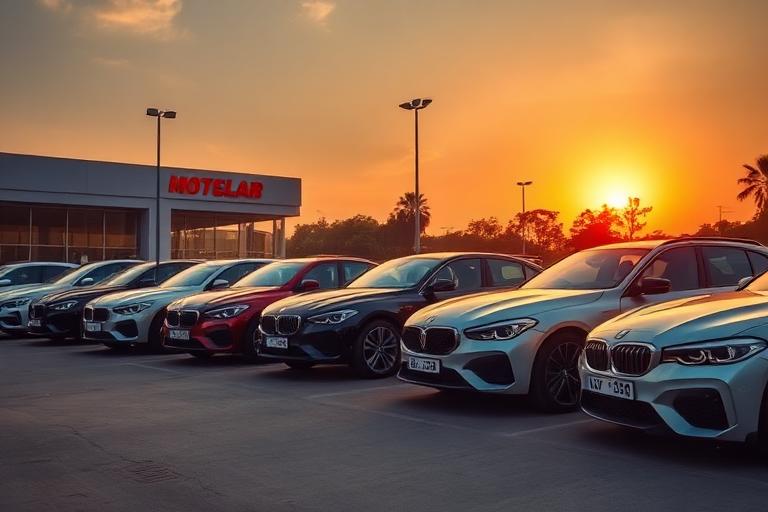
If you have never owned either, the SUV-vs-sedan debate can feel personal. After delivering hundreds of both types from our Etah showroom, here is a fact-based view tailored for North Indian buyers, and specifically for the kind of mixed city-village-highway driving most Etah owners do. Compare this against our best used cars under ₹5 lakh guide for budget-specific picks.
Where SUVs genuinely win
- Ground clearance — typically 190–210 mm vs 165–175 mm for sedans. Handles UP village roads, unpaved diversions and monsoon water-logging easily.
- Higher seating position — better visibility in dense traffic, easier ingress for elderly parents, and a meaningful confidence boost for new drivers.
- Stronger road presence and resale demand — the SUV trend in India is structural, not cyclical.
- More usable boot space in most compact SUVs vs equivalent sedans.
- Tougher front-end design absorbs minor impacts (potholes, kerbs) with less expensive damage.
Where sedans still win
- Highway stability above 100 km/h — lower centre of gravity, less body roll, more confident overtaking.
- Better fuel economy — typically 2–3 km/l more than an equivalent compact SUV with the same engine.
- Lower insurance premiums and tyre cost — smaller tyres cost ₹3,500 less per piece on average.
- Quieter cabin at highway speeds — better aerodynamics and lower NVH.
- Cheaper to maintain — smaller brakes, lighter suspension parts, easier engine bay access.
Total cost of ownership over 5 years
Let's do real numbers. Take a used 2020 Honda City (₹8.5 lakh today) vs a used 2020 Hyundai Creta (₹11 lakh today), both diesel, both with similar kilometres.
- Annual fuel cost (15,000 km @ 18 km/l for City, 15 km/l for Creta, ₹95/l): City ₹79,000, Creta ₹95,000 — Creta costs ₹16,000 more per year.
- Annual insurance (year 2): City ₹14,000, Creta ₹19,000 — Creta costs ₹5,000 more.
- Annual service: City ₹8,500, Creta ₹11,000 — Creta costs ₹2,500 more.
- Tyre replacement at year 3 (set of 4): City ₹22,000, Creta ₹32,000 — Creta costs ₹10,000 more.
- Total 5-year operating gap: ₹1.27 lakh in favour of the City.
However, after 5 years the Creta typically resells at 55–60% of today's value while the City sells at 45–50%. That gap claws back most — but not all — of the higher operating cost. Net-net, sedans are still cheaper to own across a 5-year horizon by ₹40,000–₹70,000.
What about safety?
Body style alone is a weak predictor of safety. A 4-star Global NCAP sedan like the Honda City is safer than a 2-star compact SUV. SUVs have a slight advantage in high-speed front-to-front crashes due to bumper-height alignment with trucks, but they have a higher rollover risk on quick lane changes. Check the specific model's crash rating before letting body style decide. Many modern compact SUVs (Brezza, Nexon, Sonet) score 4–5 stars and combine the best of both worlds.
Comfort on UP roads
GT Road and most state highways in UP are well-paved. But the moment you turn off into a village road or take a service-lane diversion during monsoon, the SUV's clearance pays for itself. A sedan can absolutely manage these conditions with careful driving — we sell plenty of City and Verna sedans to rural buyers — but the SUV is more forgiving when somebody else is at the wheel.
Family practicality
For a family of 4 with two adult children, a compact sedan like Dzire or Aura is genuinely tight in the rear. A subcompact SUV like Brezza or Nexon offers similar wheelbase but better headroom and a more usable middle seat. Step up to a compact SUV like Creta or Seltos and you get genuinely 4-adult-comfortable rear space plus a usable boot for weekend luggage.
Our recommendation by use case
- Mostly city + occasional highway, couple or family of 3 → sedan. Honda City, Hyundai Verna or Maruti Dzire.
- Frequent rural / village runs + family of 5 → compact SUV. Hyundai Creta, Kia Seltos or Tata Harrier (if budget allows).
- Mixed use with strong resale priority and budget under ₹10 lakh → subcompact SUV. Tata Nexon, Maruti Brezza or Kia Sonet.
- Pure off-road / lifestyle use → 4x4. Read our Mahindra Thar vs Force Gurkha used buyer guide.
- Budget under ₹5 lakh — sedan rarely makes sense at this price. Pick a hatchback or subcompact instead.
Financing either choice
Both sedans and SUVs qualify for the same used-car loan rates. SUVs tend to attract slightly higher loan amounts because their valuations are higher. Full rate and eligibility details in our used car loan in Etah eligibility and EMI guide.
Final word from our Etah showroom
In 2026, the practical answer for most Etah buyers under ₹10 lakh is a subcompact SUV — Tata Nexon and Maruti Brezza in particular hit the sweet spot of ground clearance, fuel economy, resale and family practicality. Above ₹10 lakh, compact SUVs like Creta and Seltos justify the premium. Below ₹6 lakh, hatchbacks remain unbeatable on total cost of ownership. Sedans make sense for highway-heavy commuters who value refinement above everything else.
Drive in to our Ganga Nagar showroom on GT Road and we will arrange back-to-back test drives of both a sedan and an SUV in your budget — the difference becomes obvious within 10 minutes.
Body-style trends in the Etah used market
Five years ago, our showroom moved 60% sedans, 25% hatchbacks and 15% SUVs. Today the mix is 45% SUVs (compact + subcompact), 35% hatchbacks and only 20% sedans. The shift is driven less by aspiration and more by practical considerations: SUVs handle the rural road network around Etah, Kasganj and Mainpuri more comfortably, and the resale-value premium is real. Sedans now sell mostly to highway-heavy commuters, taxi operators, and families upgrading from a hatchback who explicitly value refinement over road presence. Understanding where the market is moving helps you make a resale-aware choice today — buying against the trend usually costs ₹40,000–₹70,000 in extra depreciation over 4 years.
Insurance and tyre cost differences that nobody tells you about
- Insurance: SUV premiums are typically 10–18% higher than a similarly priced sedan because IDV scales with the body shell and engine displacement. The gap narrows on older cars.
- Tyres: a 215/60 R17 SUV tyre costs ₹6,500–₹9,000 each vs ₹4,000–₹5,500 for a 185/65 R15 sedan tyre. Over 4 sets in 8 years, that is ₹35,000–₹60,000 extra.
- Brake pads and discs: SUV brakes wear roughly 15% faster due to higher mass, but pad cost is similar. Disc replacement on bigger SUV brakes is 30% more expensive.
- Suspension: SUV bushes and arms are more expensive but last longer on rough roads. Sedan suspension is cheaper but more frequently damaged on potholes.
Comfort for elderly family members
If a regular passenger is over 60 or has knee issues, the SUV's higher seat height (typically 650–700 mm vs 500–550 mm for sedans) makes a real daily difference. We have had multiple families specifically swap from sedan to SUV after their parents complained about getting in and out. Subcompact SUVs like Brezza, Nexon and Venue are the sweet spot — high enough seating for easy ingress, but compact enough to park anywhere in Etah's narrow market lanes.
Long-distance highway trips — the real numbers
On a recent 220 km Etah–Lucknow run with mixed traffic, our test team logged: Honda City (1.5 petrol) — 4 hr 5 min, 16.8 km/l, very low driver fatigue. Hyundai Creta (1.5 petrol) — 4 hr 15 min, 13.4 km/l, slightly more steering effort at 100 km/h, marginally noisier cabin. The sedan was noticeably more relaxing over 200+ km, but the SUV's cabin space made up for it on the family stretch. For commuters doing the Etah–Lucknow or Etah–Delhi run weekly, a refined sedan still has a genuine quality-of-life advantage over a comparable SUV.
Our most popular cross-category picks at our Etah showroom
Across budgets, these are the cars that get sold the day they arrive: under ₹5 lakh — Maruti Swift, Hyundai Grand i10 Nios, Tata Tiago. ₹5–8 lakh — Maruti Dzire, Honda Amaze, Tata Nexon, Maruti Brezza. ₹8–12 lakh — Honda City, Hyundai Verna, Hyundai Creta, Kia Seltos. ₹12 lakh+ — Mahindra XUV700, Tata Harrier, Skoda Slavia. For specific picks under ₹5 lakh see our best used cars under ₹5 lakh in Etah guide. For finance options across all of these, see our used car loan eligibility and EMI guide.
Frequently asked questions
Are SUVs safer than sedans in India?
Generally yes due to higher seating and crash structures, though specific models matter more than body type. Check Global NCAP ratings before buying.
Which lasts longer — SUV or sedan?
Both can easily cross 2 lakh km with care. Diesel engines tend to last longer regardless of body type.
Why are SUVs more popular even though sedans are cheaper to run?
Higher resale, better visibility, more cabin space and the structural shift in Indian consumer preference. The premium is real but increasingly justified.
Is a sedan still safe on village roads in UP?
Yes, with careful driving. Most modern sedans have 165+ mm clearance which is enough for paved village roads. Avoid heavily rutted dirt tracks.