Used Car Loan in Etah — Eligibility, Interest Rates & EMI Guide (2026)
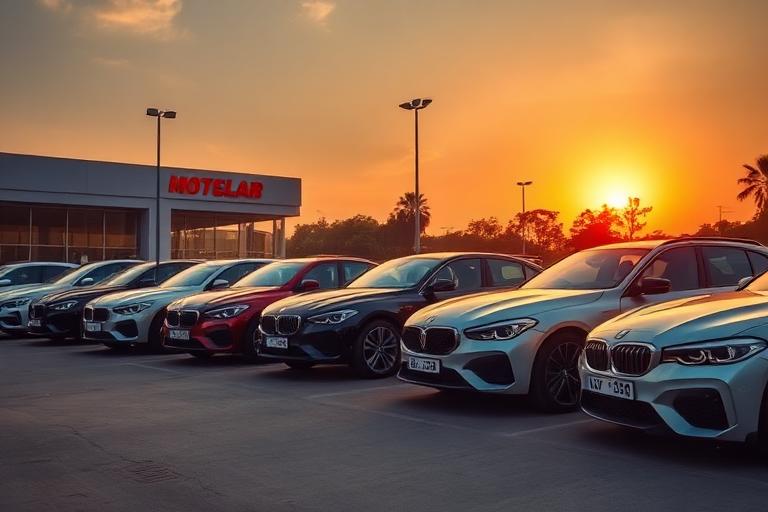
A used-car loan today is just as easy to get as a new-car loan, provided you walk in prepared. Rates are competitive, sanction is fast, and most clean files are funded within 24 hours. The trouble is, very few buyers actually know what banks check, what counts against them, and how to negotiate. Here is the complete playbook we share with every buyer at our Etah showroom — the same approach that gets sanctions through on the same day they apply. If you are still choosing a car, browse our pre-owned inventory or read our best used cars under ₹5 lakh in Etah buyer guide first.
Who is eligible for a used car loan?
- Age between 21 and 65 years at loan maturity.
- Minimum monthly net income of ₹15,000 for salaried applicants.
- Minimum ₹2 lakh annual ITR for self-employed applicants, ideally for the last 2 years.
- Indian resident with valid permanent address proof.
- CIBIL score of 700+ for the lowest interest rates (scores between 650–700 are still funded, just at higher rates of 12–14%).
- Vehicle should typically be less than 8 years old at the time of loan maturity (so a 5-year-old car can be funded for up to 3 years, etc.).
Documents you'll need
- PAN card and Aadhar card (mandatory for KYC).
- Latest 3 months' salary slips OR last 2 years' ITR with computation.
- 6 months' bank statement showing salary credit or business turnover.
- Latest Form 16 for salaried (strengthens the file).
- Address proof — utility bill, rent agreement, or passport.
- 2 passport-size photographs.
- For self-employed: GST returns of last 2 quarters and business proof.
Interest rates in 2026 — what's actually available
Through our partner banks and NBFCs, used-car loan rates start at 9.5% per annum and typically range up to 14% based on profile, car age, vehicle make, and tenure. Premium brands like Honda, Toyota and Maruti attract the lowest rates because resale risk is low for the bank. Older cars and lesser-known brands attract a 50–150 basis point premium.
Floating-rate loans linked to repo rate are now the norm. A 25 basis-point RBI cut typically flows through to your EMI within one quarter — useful in a falling rate environment.
How much loan can you actually get?
Banks fund 70–85% of the dealer-assessed value of the car. The remaining 15–30% is your down payment. For example, a ₹6 lakh car typically needs ₹90,000–₹1.8 lakh down payment. NBFCs sometimes fund up to 95% but at higher rates — usually not worth it unless your CIBIL is borderline.
Your loan amount is also capped by your repayment capacity. Most banks limit total EMI obligations (across all loans) to 50% of your net monthly income. If you already have a home loan or personal loan, that eats into your eligibility.
EMI calculation — worked examples
EMI follows the standard amortisation formula. Here are realistic numbers for the Etah used-car market in 2026:
- ₹3 lakh loan, 10.5% p.a., 36 months → ₹9,750/month approx.
- ₹4 lakh loan, 10.5% p.a., 48 months → ₹10,250/month approx.
- ₹6 lakh loan, 10.0% p.a., 48 months → ₹15,200/month approx.
- ₹8 lakh loan, 9.75% p.a., 60 months → ₹16,900/month approx.
- ₹10 lakh loan, 9.5% p.a., 60 months → ₹21,000/month approx.
A longer tenure reduces EMI but increases total interest paid. On a ₹6 lakh loan, choosing 60 months instead of 48 months saves ₹2,800/month in EMI but costs an extra ₹38,000 in total interest. Pick a tenure that fits your budget without stretching.
Fees and charges to budget for
- Processing fee: 1–2% of loan amount (often negotiable to flat ₹3,500–₹5,000).
- Documentation/stamp duty: ₹500–₹1,500.
- Hypothecation endorsement at RTO: ₹150–₹300.
- Insurance assignment endorsement: ₹100.
- GPS device (some NBFCs): ₹2,500–₹4,000.
Common reasons for loan rejection
- CIBIL below 650 with recent missed credit-card EMIs.
- Credit card utilisation above 80% on multiple cards.
- Multiple loan enquiries in the last 30 days — looks like distress borrowing.
- Salary credited in cash instead of bank — banks cannot verify income.
- Car older than 10 years (most banks decline outright).
- Mismatched address between PAN/Aadhar and current residence proof.
If you suspect any of these apply to you, talk to us first. We help borderline files by pairing the right NBFC with the right car.
Same-day approval through Riyaansh Car20
We submit your file directly to HDFC Bank, ICICI Bank, Kotak Mahindra Prime, Mahindra Finance and IDFC First Bank. Most clean files get sanctioned within 24 hours and disbursed at the time of car delivery — meaning you can drive home the same day you visit the showroom. We do not charge a fee; banks pay us a small DSA commission directly.
Pro tips to lower your effective rate
- Pay slightly more down payment than required — banks reward higher LTV cushion with rate concessions.
- Choose a 36 or 48 month tenure — shorter loans often get 25 bps better rates.
- Get your salary account at the lending bank — internal customers get pre-approved offers.
- Avoid taking a personal loan in the same month — it kills your eligibility.
- If your CIBIL is 800+, ask explicitly for a "special rate" — most relationship managers have discretion to drop 50 bps.
Selling a financed car later?
If you ever decide to sell a used car that still has a running loan, we manage the entire closure-and-transfer process. Read our how to sell your used car in Etah fast guide for the step-by-step.
Ready to apply?
Walk in to our Etah showroom on GT Road with your documents, or send them on WhatsApp ahead of time. We pre-screen the file, share an indicative EMI, and only then ask you to commit. Compare our offer with your salary bank — chances are we will match or beat it.
Top-up loans and balance transfer — when they make sense
If you already have a running used-car loan and rates have dropped, a balance-transfer to another lender can save 100–200 basis points. The cost-benefit makes sense only if your remaining tenure is 24 months or more — anything shorter and the processing fee (typically 1% of outstanding) eats into the savings. Most banks do not charge foreclosure fees on floating-rate used-car loans after 12 EMIs, which makes the move cleaner. A top-up loan against your existing car (additional borrowing on the same hypothecation) is occasionally useful for related expenses like a major service, accessories or insurance — rates are similar to a personal loan but secured against the car, so cheaper than unsecured borrowing.
Joint loans and co-applicants
Adding a spouse or parent as a co-applicant boosts eligibility by combining incomes and often unlocks better rates. The co-applicant must consent in writing and submit KYC and income documents. Their CIBIL is also checked, so a strong co-applicant can rescue a borderline primary file. Joint ownership of the car (with both names on the RC) is optional and adds nominal RTO charges — but it does make later inheritance and resale paperwork simpler if the primary owner is elderly. We help structure joint loans across all our partner banks at no extra fee.
Loan-to-value caps by car age
- Car age 0–3 years: up to 85% LTV at best rates.
- Car age 3–5 years: typically 80% LTV.
- Car age 5–7 years: 70–75% LTV, slightly higher rate.
- Car age 7–10 years: 60–65% LTV, rate premium of 100–150 bps; selected NBFCs only.
- Car age 10+ years: very limited options, usually only through small NBFCs at 16%+ rates. Often better to pay cash or step up to a slightly newer car.
Loan rejection — common recovery paths
A rejection from one bank does not mean rejection everywhere. We often see files rejected by HDFC sail through at Kotak Mahindra Prime because each lender weighs profile factors differently. Our standard recovery playbook: review CIBIL report for errors and dispute them (15–30 day resolution), pay down credit card balances to under 30% utilisation, add a strong co-applicant, increase down payment by 10–15% to reduce loan size, or pivot to a slightly cheaper car that the same income comfortably covers. Most originally-rejected files we work with end up disbursed within 2 weeks of starting the recovery process.
GST, road tax and registration — what is loanable vs cash
Banks lend against the assessed market value of the car. RTO road-tax (for inter-state transfers), insurance, accessories and extended warranty are typically your cash spend, not loanable. Budget 8–12% of the car's price in cash on top of the down payment for these one-time costs. Skipping them does not save money — it just delays unavoidable spending into the first few months of ownership.
Related reading
Once your loan is sanctioned, you also need to plan the RC transfer process — we handle this free with every car. If you are still picking a car, our best used cars under ₹5 lakh in Etah and second-hand SUV vs sedan for UP guides will narrow your shortlist quickly.
Frequently asked questions
What is the minimum CIBIL score for a used car loan?
Most banks require 700 or above for the best rates. Scores between 650 and 700 are still funded, usually at 1–2% higher interest.
Can I prepay my used car loan?
Yes. Most banks allow part-payment after 6 EMIs and full closure after 12 EMIs with little or no foreclosure charges on floating-rate loans.
Does Riyaansh Car20 charge for loan processing?
No. Our loan coordination service is free for buyers — banks pay us a small DSA commission directly.
How long does loan approval take?
Typically 24 hours for a clean file. Same-day disbursement is common when documents are complete at application time.
Can self-employed without ITR get a used car loan?
Yes, via certain NBFCs using bank statements and business proof, but at higher rates (13–16%) and lower LTV.